

Chapter 2: Analytical principle
This chapter provides a practical overview of the science behind OpenArsenic.

2.1 Introduction
Understanding the underlying analytical principle is not required to operate the OpenArsenic platform successfully. However, a basic understanding of how the method works can help users troubleshoot problems, interpret results, and understand the limitations of the technique.
This chapter provides a practical overview of the science behind OpenArsenic. The explanations are intended for users with little or no previous experience in electrochemistry.
The OpenArsenic method is based on anodic stripping voltammetry (ASV), an electrochemical technique that allows trace concentrations of dissolved metals to be measured using relatively simple and low-cost instrumentation. The current OpenArsenic method is optimized for the determination of dissolved arsenic in groundwater.
2.2 What is arsenic?
Arsenic is a naturally occurring element found in rocks, soils, sediments, and groundwater throughout the world. Under certain geological conditions, arsenic can dissolve into groundwater and accumulate to concentrations that may pose risks to human health. Unlike many other contaminants, arsenic has no taste, smell, and is not visible in water.
As a result, laboratory testing is usually required to determine whether a water source contains elevated arsenic concentrations.
Health Impacts
Long-term exposure to elevated arsenic concentrations in drinking water has been associated with:
- Skin lesions
- Cardiovascular disease
- Developmental effects
- Neurological effects
- Various forms of cancer
Because arsenic exposure often occurs over many years, routine monitoring is an important component of groundwater management and public health protection.
2.3 Why measure arsenic?
Groundwater is an important source of drinking water for many communities worldwide. Unfortunately, groundwater quality can vary significantly between wells, regions, and aquifers. Even neighboring wells may contain very different arsenic concentrations. Routine arsenic monitoring can help:
- Identify contaminated water sources
- Prioritize treatment efforts
- Evaluate treatment system performance
- Monitor changes over time
- Support community decision-making
The World Health Organization (WHO) guideline value for arsenic in drinking water is currently: 10 µg/L (10 ppb)
Many countries have adopted this value or a similar regulatory limit. Because arsenic concentrations near this guideline value may still pose health concerns, analytical methods capable of measuring low concentrations are essential.
2.4 What is electrochemistry?
Electrochemistry is the study of chemical reactions involving the transfer of electrons. Many chemical species can gain or lose electrons under the right conditions. These electron-transfer reactions can be measured using electrodes connected to an electronic instrument called a potentiostat.
The OpenArsenic platform uses a electrochemistry technique call anodic stripping voltammetry to detect arsenic by measuring the electrical current produced during a controlled electrochemical reaction. The technique consists of two main stages:
The deposition step: During deposition, a negative potential is applied to the working electrode. This causes dissolved arsenic in the sample to accumulate on the gold electrode surface. The longer the deposition step, the more arsenic can be collected.
The stripping step: After deposition, the potential is scanned in the positive direction. As the potential changes, the deposited arsenic is oxidized and released back into solution. This process produces a current peak. The size of the peak is related to the amount of arsenic originally present in the sample.
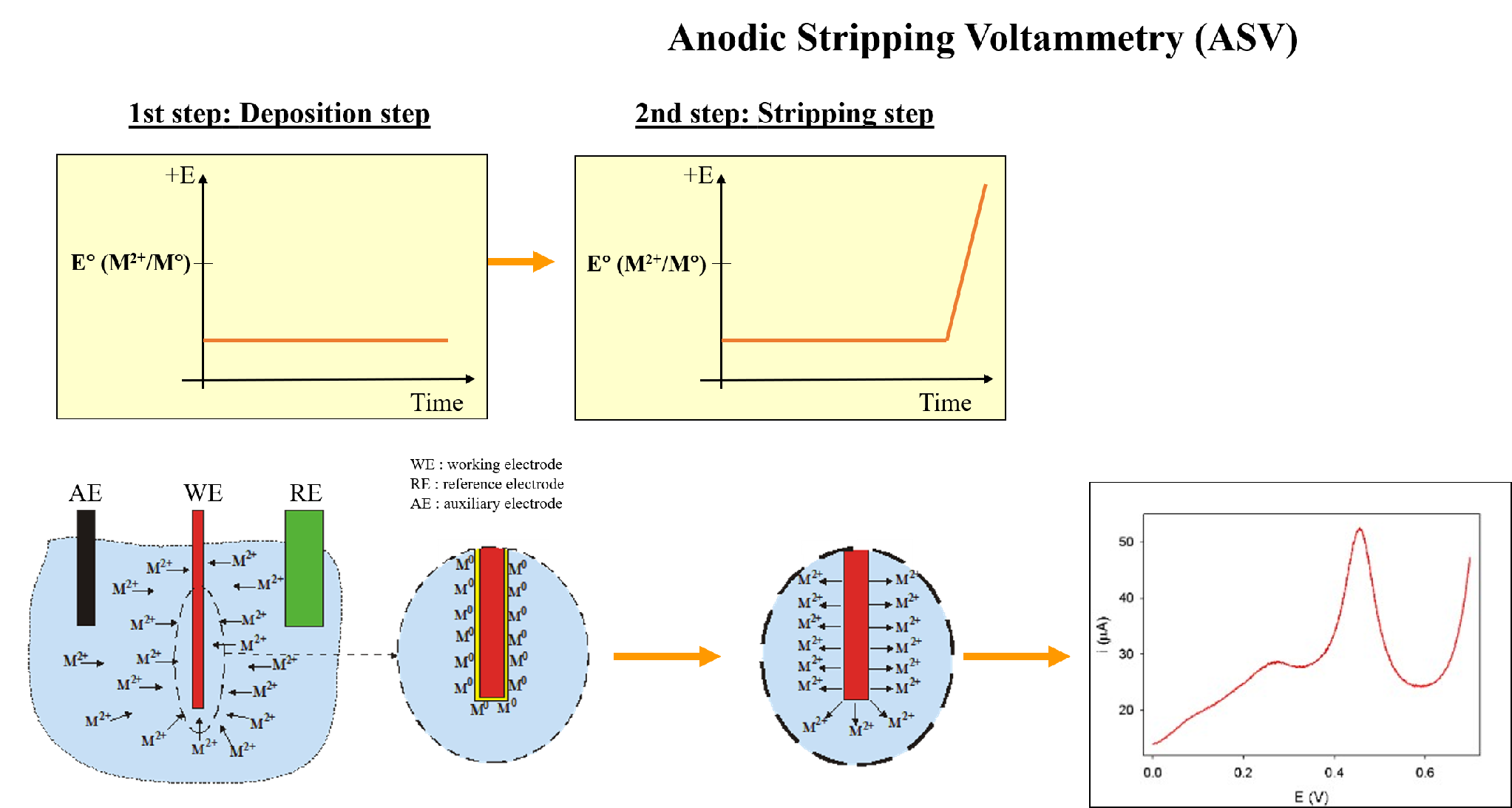
Figure 2.1: The anodic stripping voltammetry mechanism consisting of the stripping and deposition step. Showing the reduction and oxidation of ‘M’ .
2.5 What is a potentiostat?
A potentiostat is an instrument that controls the electrical potential applied to an electrochemical cell and measures the resulting current. In the OpenArsenic platform, this function is performed by the Rodeostat potentiostat.
The potentiostat continuously controls the conditions required for the electrochemical measurement and records the resulting signals. The measured current is typically extremely small, often in the microampere (µA) range.
Simplified diagram of a potentiostat connected to an electrochemical cell?
Figure 2.2: Potentiostat connected to an electrochemical cell
2.6 The three-electrode system
The OpenArsenic platform uses a three-electrode configuration. Each electrode performs a different role in the measurement.
Working Electrode
The working electrode is where arsenic is collected and measured. For the current OpenArsenic method, a gold microwire is used as the working electrode. Gold is commonly used for electrochemical arsenic measurements because it provides favorable electrochemical behavior and good sensitivity.
Reference Electrode
The reference electrode provides a stable reference potential. Its purpose is not to carry current but to provide a stable electrical reference against which all potentials are measured. The current OpenArsenic method uses an Ag/AgCl reference electrode.
Counter Electrode
The counter electrode completes the electrical circuit. Current flows between the working and counter electrodes during the measurement. The current OpenArsenic method uses an iridium wire as the counter electrode.
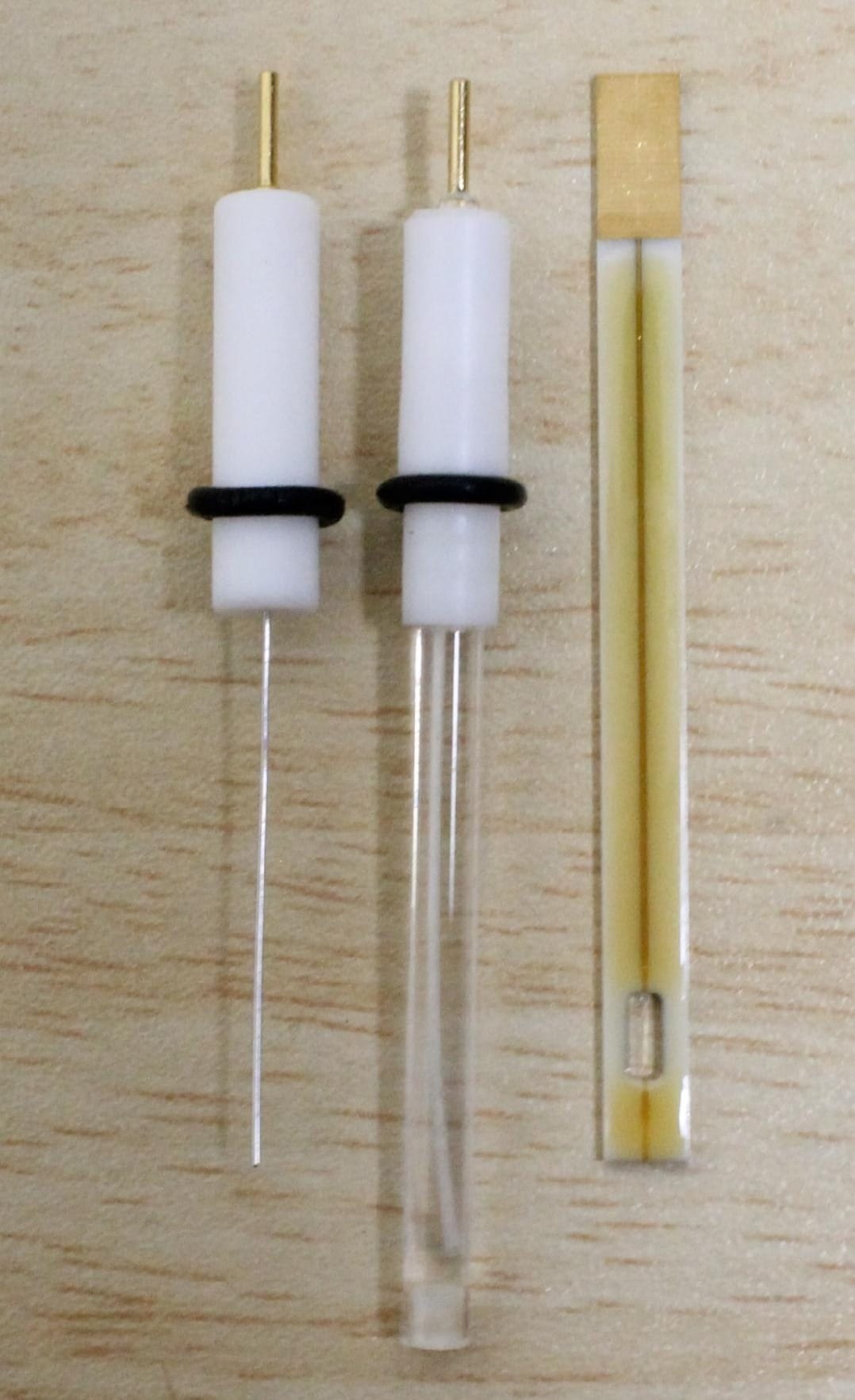
Figure 2.3: The three-electrode configuration used by the OpenArsenic platform. From left to right showing the iridium wire (CE), the Ag/AgCl in 3M KCl (RE), and the gold microwire (WE).
2.7 What is a voltammogram?
A voltammogram is a graph showing current as a function of applied potential. It is the primary output of an electrochemical measurement. In OpenArsenic, the arsenic peak appears as a characteristic feature in the voltammogram.
The exact appearance of the peak may vary depending on:
- Arsenic concentration
- Electrode condition
- Sample composition
- Experimental settings
The goal of the analysis process is to identify and quantify this peak.
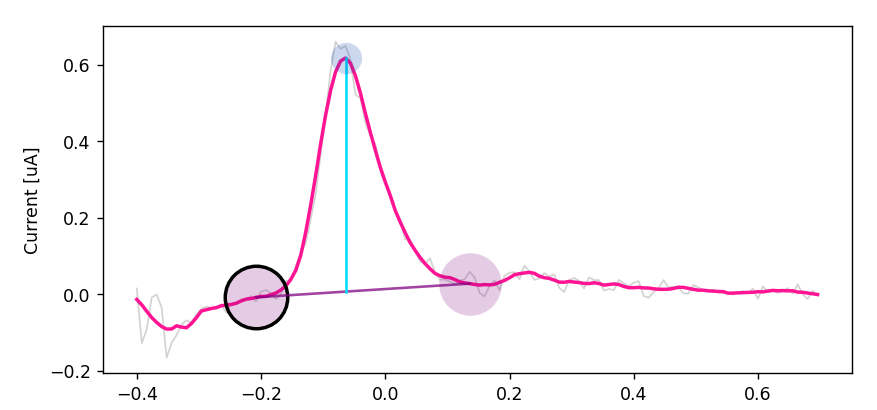
Figure 2.4. Example voltammogram illustrating the arsenic peak and baseline used for quantification.
2.8 Why use standard addition?
Natural groundwater contains many dissolved compounds that may influence electrochemical measurements. These influences are commonly referred to as matrix effects. Standard addition is a quantification method that compensates for many matrix effects.
The process involves:
- Measuring the original sample.
- Adding a known amount of arsenic standard.
- Measuring again.
- Adding a second known amount of arsenic standard.
- Measuring again.
- Constructing a calibration line from the resulting data.
The original arsenic concentration is determined from this calibration line. This approach is particularly useful when sample composition varies significantly between locations.
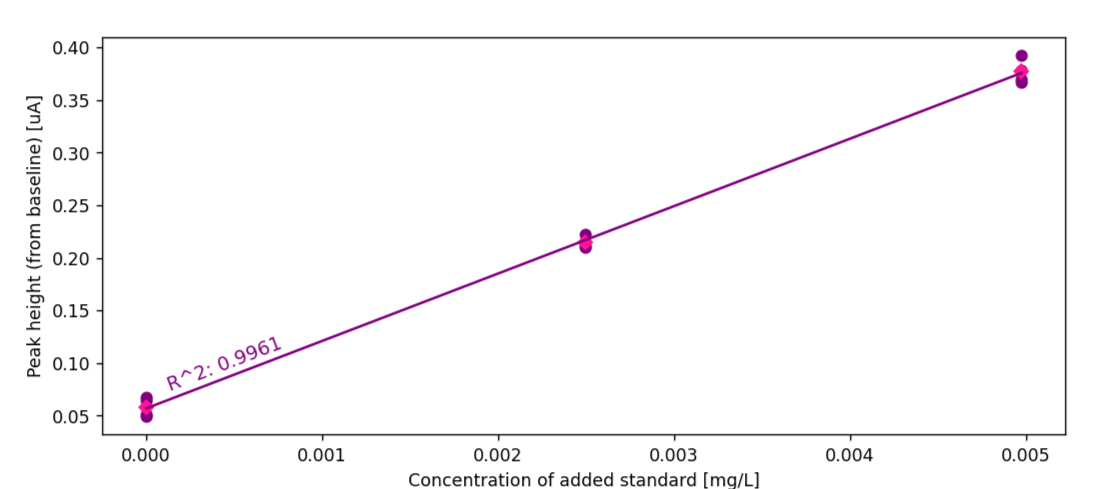
Figure 2.5. The standard addition calibration curve used for the calculation of the arsenic concentration by OpenVoltam
2.9 The supporting electrolyte
The OpenArsenic method uses hydrochloric acid (HCl) as the supporting electrolyte. HCl serves several important functions:
- Provides electrical conductivity
- Creates a stable chemical environment
- Improves arsenic deposition
- Improves reproducibility
- Supports low detection limits
The optimized OpenArsenic method uses a final electrolyte concentration of approximately: 0.1 M HCl. Users should follow the reagent preparation procedures described later in this manual to ensure consistent results.
2.10 Why electrode conditioning is important
The condition of the working electrode has a major influence on analytical performance. Over time, the electrode surface may become contaminated or altered by previous measurements.
Electrode conditioning helps:
- Clean the electrode surface
- Restore electrochemical activity
- Improve reproducibility
- Reduce variability between measurements
For this reason, electrode conditioning is typically performed:
- Before the first measurement of the day
- After contamination
- When signal quality deteriorates
A dedicated conditioning procedure is described later in this manual.
2.11 Strengths and limitations of the method
Like any analytical technique, the OpenArsenic method has both strengths and limitations.
| Strengths | Limitations |
|---|---|
|
|