

Chapter 5: Hardware maintenance
This chapter explains how to maintain your hardware properly to facilitate proper arsenic measurements.
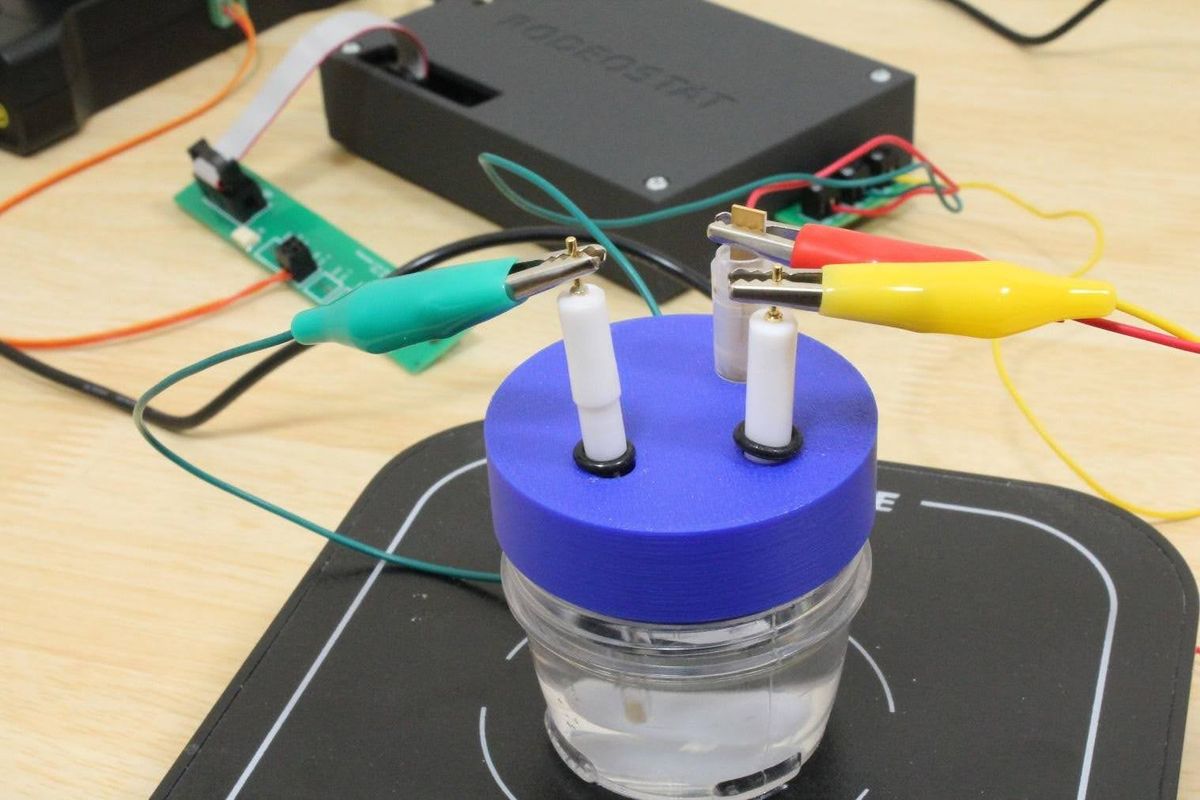
5.1 Introduction
Routine maintenance is essential for achieving reliable arsenic measurements. Most hardware problems can be prevented through regular inspection and cleaning. The following sections explain how to maintain your hardware properly to facilitate proper arsenic measurements and a long hardware lifetime.
5.2 Working electrode maintenance
The gold microwire is the most critical component of the analytical system. Users should routinely inspect physical damage and contamination. Indicators of possible problems include reduced sensitivity, unstable peaks, increased noise and poor reproducibility.
To clean the work electrode you should carry out the electrode conditioning experiment as described in chapter 10. Running that experiment once or twice should remove most contaminations. If that doesn’t help, and you are sure that it is not a cable connection issue, it is time to replace the work electrode for a new one.
5.3 Reference electrode maintenance
The reference electrode that is recommended for OpenArsenic is a Ag/AgCl electrode in 3 M KCl. Ensure that the electrolyte level is high enough and that there are no bubbles present. You can refill the electrolyte when needed, following the notes from the supplier.
Salt crystallization may occur when the electrode is not used for a while. Rinse the electrode well with demineralized water to remove any salts.
5.4 Counter electrode maintenance
The counter electrode typically requires minimal maintenance. The authors have actually never had to replace a counter electrode. As goes for all electrodes, it is recommended to rinse with demineralized water after usage. Of course the electrode could break somehow, which would mean you would have to replace it.
5.5 Electrochemical cell cleaning
The electrochemical cell should be emptied after each completed measurement. Rinse it three times with deionized water and inspect for residues. Avoid abrasive cleaning materials and cross-contamination between samples. It is recommended to have one container for deionized water only and one for measurements only. When the electrochemical cel is not in use, it can rest in the container with deionized water.
5.6 Cable inspection
Loose or damaged cables are a common source of measurement instability. Regularly inspect:
- USB cables
- Electrode leads
- Connectors
Replace damaged cables immediately.
5.7 Storage between measurement sessions
If the system will not be used for an extended period:
- Electrodes: Clean thoroughly with deionized water and store in protective containers
- Rodeostat: Disconnect from power and store in a dry location
- Chemicals: Store according to laboratory procedures and clearly label containers
- Documentation: Backup all measurement data