

Chapter 3: Hardware overview
This chapter provides an overview of the hardware required to operate the OpenArsenic platform.
3.1 Introduction
The OpenArsenic platform consists of a collection of hardware components that work together to perform electrochemical arsenic measurements. While the system is based on relatively simple equipment, each component plays an important role in ensuring reliable and reproducible results.
This chapter provides an overview of the hardware required to operate the OpenArsenic platform. Detailed assembly instructions are provided in Chapter 4.
The current OpenArsenic method has been developed and validated using the hardware described in this chapter. Alternative hardware may be suitable, but users should verify performance before implementing modifications.
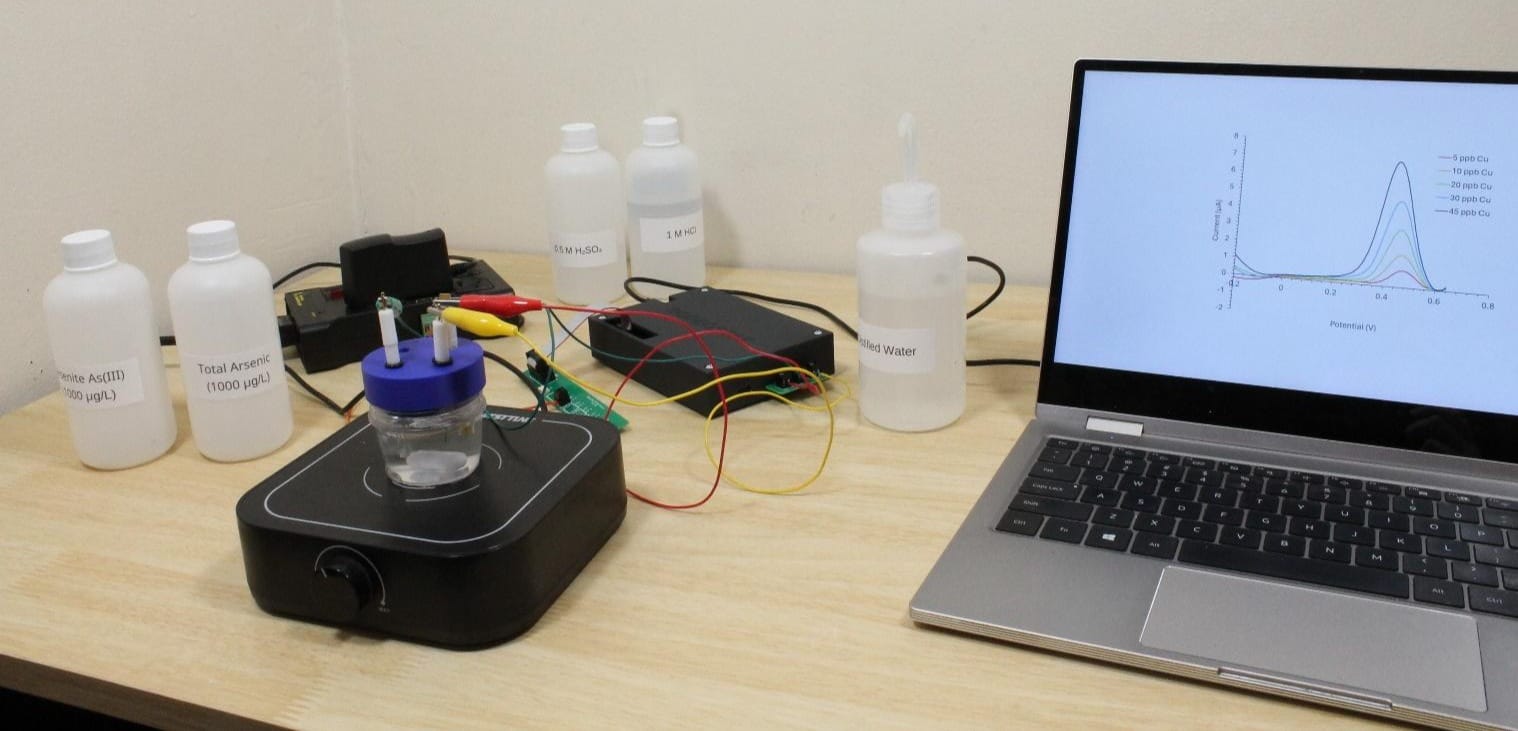
Figure 3.1. Example OpenArsenic laboratory setup showing the primary hardware components used during routine arsenic measurements.
3.2 Overview of hardware components
3.2.1 Required equipment
| Equipment | Purpose / description | Notes |
|---|---|---|
| Rodeostat potentiostat | Electrochemical controller used to apply voltages and record currents. | Includes USB cable, electrode cables, dummy cell, and small screwdriver depending on package. |
| Gold microwire working electrode | Surface where arsenic is deposited and measured. | Typical specification: 30 µm diameter, approximately 5 mm length. Handle carefully; it can break. |
| Ag/AgCl reference electrode | Provides a stable reference potential. | Filled with 3 M KCl. Check for bubbles, low filling solution, or salt crystals. |
| Counter electrode | Completes the current path. | Iridium or platinum wire recommended. |
| Magnetic stirrer plate and stir bar | Mixes solution during deposition. | Stirring improves mass transport and sensitivity. Stir bar size matters; too large or too strong stirring can destabilize the setup. |
| Relay | Controls stirrer. | Automatically turns on/off the stirrer. |
| Computer | Runs OpenVoltam. | Windows operating system. |
| Electrochemical cell | Container holding the measurement solution and electrodes. | The lid should position working, reference, and counter electrodes without contact between them. |
3.2.2 Recommended equipment and consumables
| Item | Purpose / recommendation |
|---|---|
| Adjustable pipettes | Recommended ranges: 1-10 mL and 100-1000 µL. |
| Pipette tips | Use clean tips and change tips between standards/samples to avoid contamination. |
| Laboratory clamp | Useful to stabilize electrodes and cables. |
| Deionized water squeeze bottle | Used for rinsing glassware and electrodes. |
| Plastic storage containers | For storing acid solutions and standards. Opaque containers are recommended for As(III) solutions. |
| Labels and permanent marker | Essential for sample IDs, standards, acids, waste, and dates. |
| pH meter | Recommended but not strictly required if solutions are prepared carefully from high-quality reagents. |
| Spare gold microwires | Strongly recommended. The working electrode is fragile and may need replacement. |
3.2.3 Required chemicals
| Chemical / consumable | Purpose | Notes |
|---|---|---|
| Hydrochloric acid (HCl) | Used as supporting electrolyte for arsenic measurements and for sample acidification. | Concentrated HCl is corrosive and can produce fumes. |
| Sulfuric acid (H2SO4) | Used for electrode conditioning via cyclic voltammetry. | Used for cleaning/conditioning, not sample analysis. |
| Certified arsenic standard solution | Used for calibration, linear range testing, and standard addition measurements. | Strongly recommended for most users. Avoids handling solid arsenic compounds. |
| Deionized water | Used for solution preparation, dilutions, rinsing, and blanks. | Use laboratory-grade DI water where possible. |
| Nitrile gloves and safety glasses | Personal protection when handling acids and arsenic-containing solutions. | Mandatory for safe laboratory work. |
3.3 Rodeostat potentiostat
The Rodeostat is the electrochemical instrument used by OpenArsenic to control the measurement and record electrochemical signals. The potentiostat controls applied potentials, records current responses, executes measurement methods and communicates with OpenVoltam.
The current OpenArsenic method was developed using the Rodeostat platform supplied by IO Rodeo. Advantages include: low cost, open-source design, portable operation and direct integration with OpenVoltam
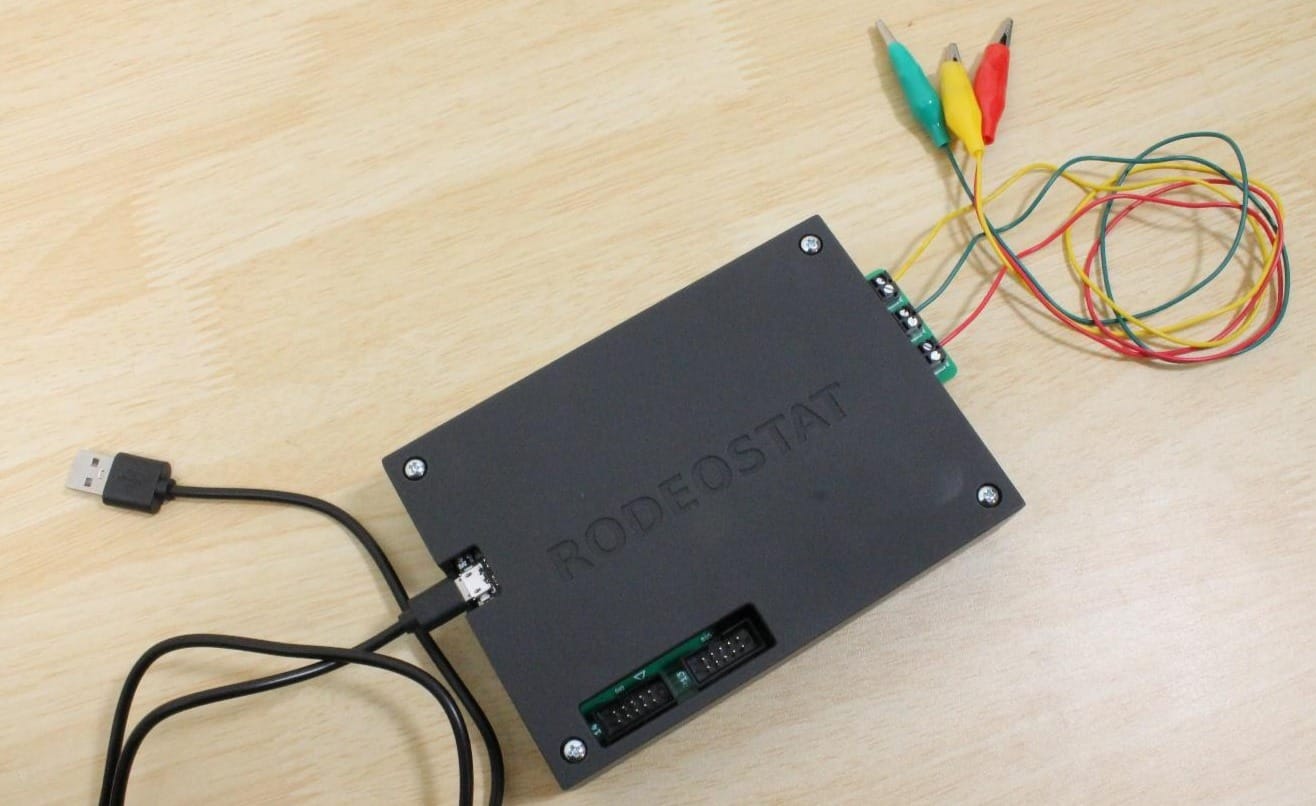
Figure 3.2. Rodeostat potentiostat used for OpenArsenic measurements.
3.4 Working electrode
The working electrode is the most important component of the analytical system. During a measurement, arsenic accumulates on the electrode surface and is subsequently stripped from the surface. The resulting signal is measured.
Typical specifications:
• Diameter: 30 µm
• Exposed length: approximately 5 mm
Gold was selected because it provides good sensitivity toward arsenic, allows for low detection limits, exhibits reproducible behavior and has favorable electrochemical properties. Because the working electrode directly determines analytical performance, proper maintenance and conditioning are essential.
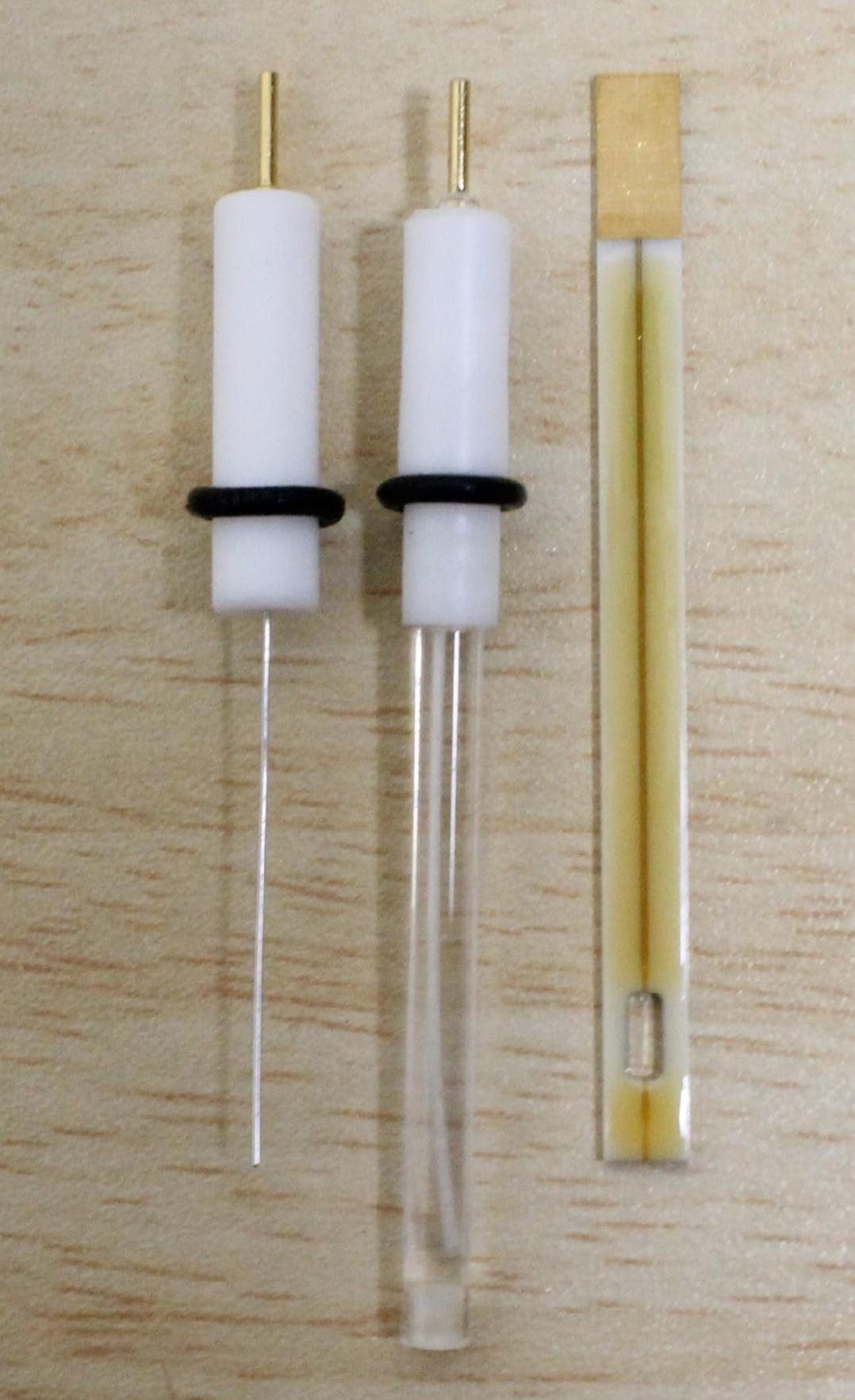
Figure 3.3: The three-electrode configuration used by the OpenArsenic platform. From left to right showing the iridium wire (CE), the Ag/AgCl in 3M KCl (RE), and the gold microwire (WE).
3.5 Reference electrode
The reference electrode provides a stable electrical reference against which all potentials are measured.
The reference electrode should remain filled with electrolyte, be free of air bubbles near the junction, and be maintained according to manufacturer recommendations. Poor reference electrode performance can cause a shift in peaks, increased variability and unstable measurements.
3.6 Counter electrode
The counter electrode completes the electrical circuit during the measurement. It carries current, supports the electrochemical reaction but does not directly determine the calculated analyte concentration.
3.7 Electrochemical cell
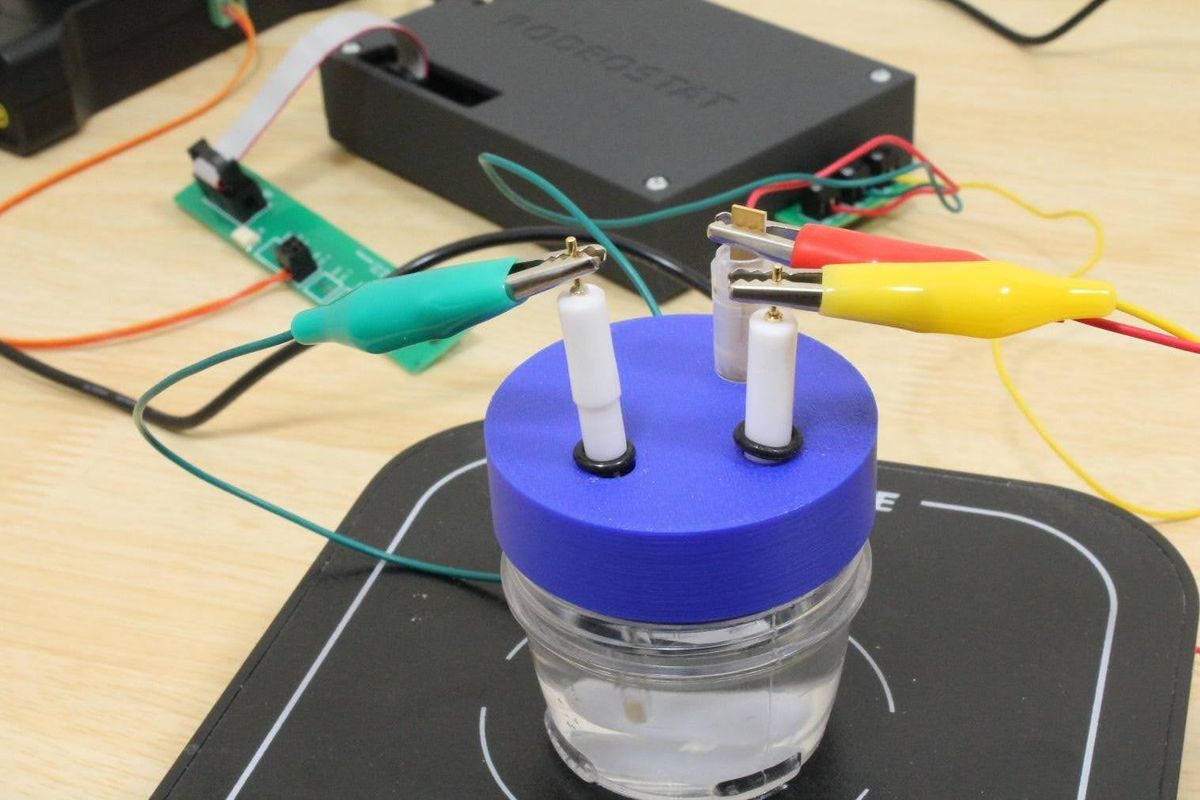
The electrochemical cell contains the sample during analysis, but also accommodates the three electrodes. The shape of the cell should allow effective stirring and the lid helps keep the cell contaminant free. Demineralized water should be used to keep the cell clean.
The link for the 3D printed electrochemical cell lid can be downloaded [add link here]
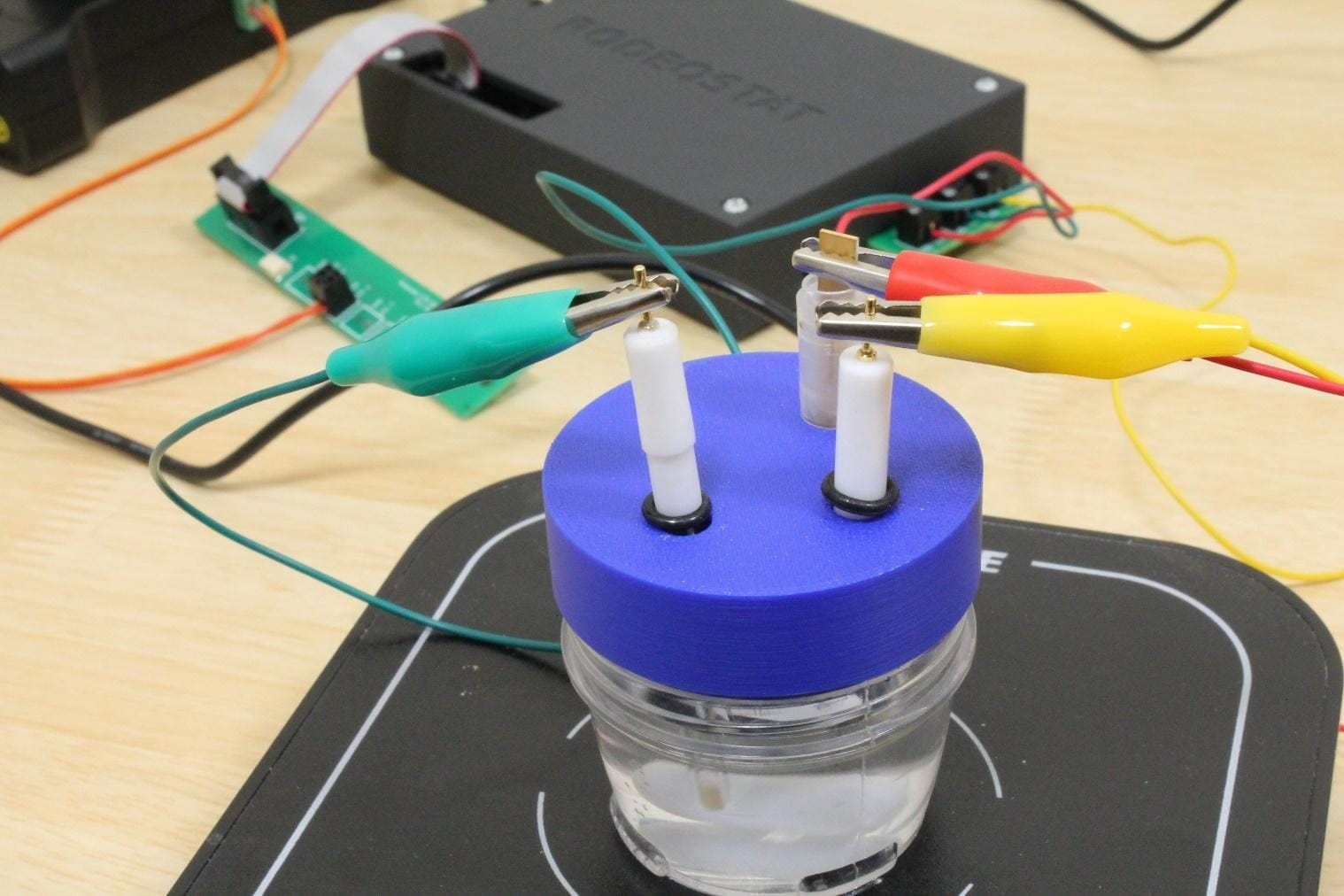
Figure 3.4. Electrochemical cell configured for arsenic measurements.
3.8 Magnetic stirrer
Stirring is used during deposition to improve mass transport of arsenic to the electrode surface. Benefits include: faster deposition, improved sensitivity and improved reproducibility
The stirrer should therefore produce stable mixing, avoid excessive turbulence and avoid splashing. The stirrer is typically stopped during the stripping scan. To stop and start the stirring, a relay is used.
3.9 Relay
A relay is used to automatically start and stop the magnetic stirrer during a measurement. The OpenArsenic platform uses a relay controlled by the Rodeostat digital output. OpenVoltam communicates with the Rodeostat, which in turn activates or deactivates the relay according to the measurement method being executed. This automation eliminates the need for manual intervention during a measurement and ensures that stirring occurs at the correct stages of the analytical procedure.
The relay is not required for basic operation of the OpenArsenic platform. Measurements can still be performed by manually starting and stopping the stirrer at the appropriate stages. However, automatic relay control is strongly recommended because it improves consistency between measurements and reduces operator workload.
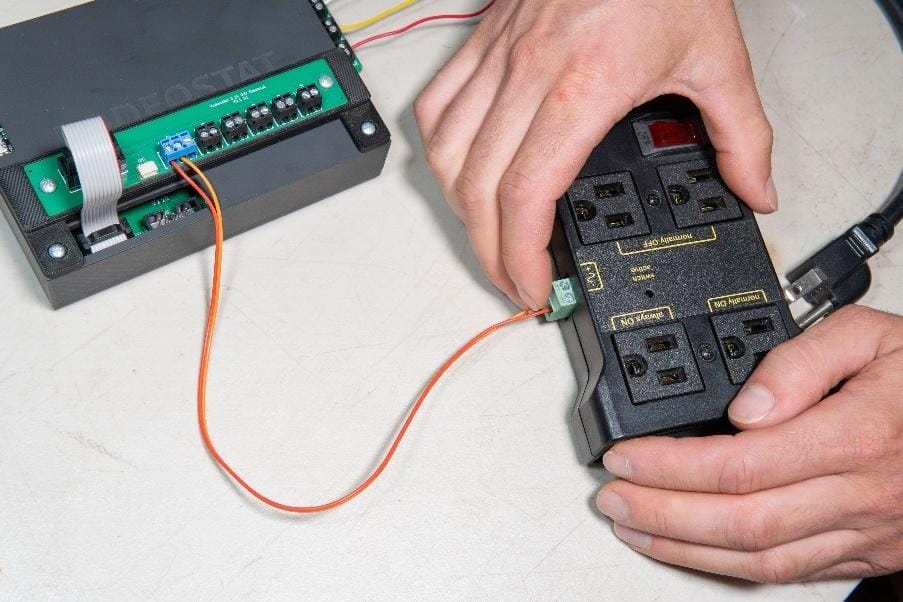
Figure 3.5. Relay system used to automatically control the magnetic stirrer during arsenic measurements.
3.10 Computer and software
The OpenArsenic platform uses OpenVoltam for method execution, data acquisition, peak analysis, standard addition calculations and data management.
The computer should have a stable USB connection, avoid sleep mode during measurements, avoid running resource-intensive software during acquisition. Detailed software instructions are provided in the OpenVoltam User Manual.